Wednesday, May 11, 2011

About Chamba

Chamba

Chamba is bounded on north-west by Jammu and Kashmir, on the north-east and east by Ladakh area of Jammu and Kashmir state and Lahaul and Bara-Bangal area of Himachal Pradesh, on the south-east and south by the District Kangra of Himachal Pradesh and Gurdaspur District of the Punjab.
The Chamba District is situated between north latitude 32° 11' 30" and 33° 13' 6" and east longitude 75°49 and 77° 3' 30", with an estimated area of 6528 square Kilometers and is surrounded on all sides by lofty hill ranges. The territory is wholly mountainous with altitude ranging from 2,000 to 21,000 feet.


History
Chamba is the only state in northern India to preserve a well documented history from circa 500 A.D. Its high mountain ranges have given it a sheltered position and helped in preserving its centuries old relics and numerous inscriptions. The temples erected by rajas of Chamba more than a thousand years age continue to be under worship.


Tourism
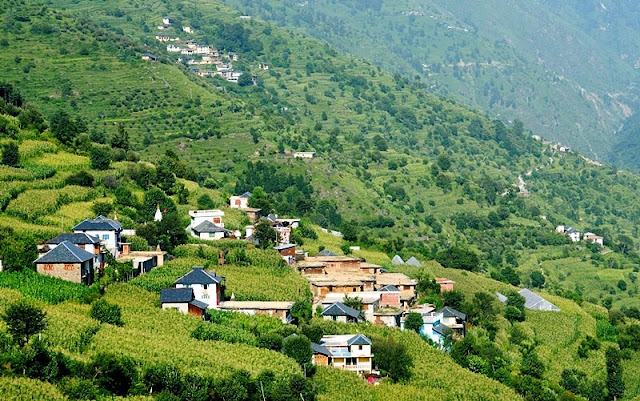
Chamba, is a small but attractive tourist destination of Himachal Pradesh, is known for its exquisite natural beauty. The place, located amidst picturesque and verdant valleys, is visited by tourist round the year. Sub-Himalayan range of mountains, full of diverse flora and fauna, make Chamba an exhilarating experience.


Administration

Chamba district has estimated area of 6528 square Kilometers and is surrounded on all sides by lofty hill ranges. The territory is wholly mountainous with altitude ranging from 2,000 to 21,000 feet. The district has 6 Sub-Divisions which comprises of 7 Tehsils and 3 sub-tehsils.

How To Get There - Chamba


By Road
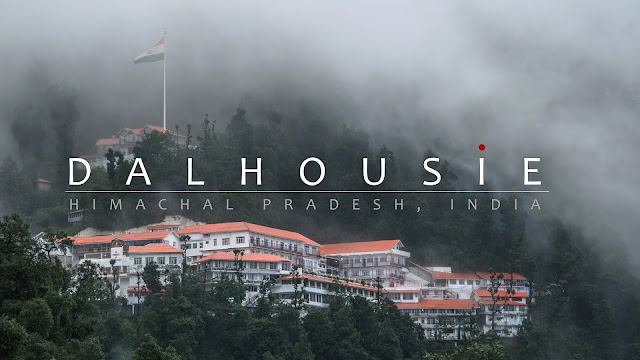
Daily bus service is available for Dalhousie and jeeps on hire are also available but it is relatively expensive.


By Air
The nearest airport is at Gaggal in Kangra valley, 180 km from Chamba. Indian Airlines operates its flights on the Delhi-Dharamsala sector.


By Rail
Chamba town is 122-km from Pathankot, the nearest broad gauge rail head, which is linked by direct trains to Amritsar, Delhi, Bombay and Calcutta. Chamba is well-connected with places in and outside the state.

General Information - Chamba


Altitude
726m


Best Time
Mid-May to Mid-October.


Location
Himachal Pradesh.

Excursions from Chamba

Bharmaur

Enveloped within the high mountain ranges, the original capital of Chamba district, Bharmaur also known as Brahmour, is a facinating little town. Mainly popular for its several ancient temples and monuments that reflect the towns glorious past. It is also the base for the famed Manimahesh Yatra and for various marvelous treks in the region.

Bandal Valley
(83Km.)
27-km. from Salooni, this is where the Himachal border meets Jammu and Kashmir.

Manimahesh Kailash
(97Km.)
The glacier lake of Manimahesh is towered by a mountain Manimahesh Kailash, which is held sacred by the Shivites, who worship at the banks of lake and follow the ritual of Manimahesh yatra or pilgrimage, following a circumambulatory path around the dramaticrock and ice peak.

Salooni
(56Km.)
Situated at a height of 1,829m.(6,000 ft.) and 56-km away from Chamba, Salooni offers a breath-taking panoramic view of the snow-covered hills and peaks.

Sarol
(11Km.)
23-km from Shimla and named after the little temple that stands on the links, is a 9-hole golf course. Lord Curzon was so much enchanted by this spot that he gave his daughter Alexandra, Naldehra as her second name. During the monsoons, several golf tournaments are also held over here.


Fairs & Festivals - Chamba

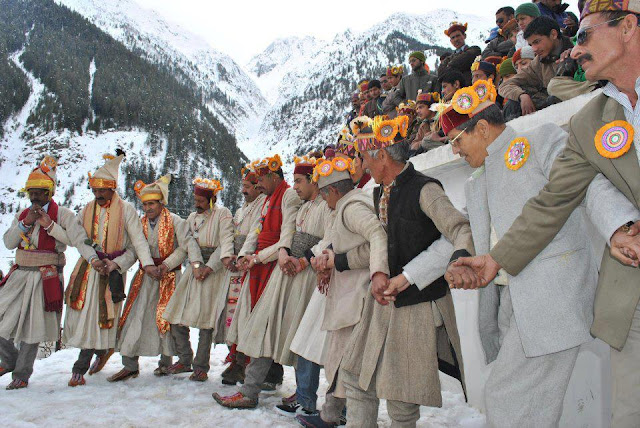
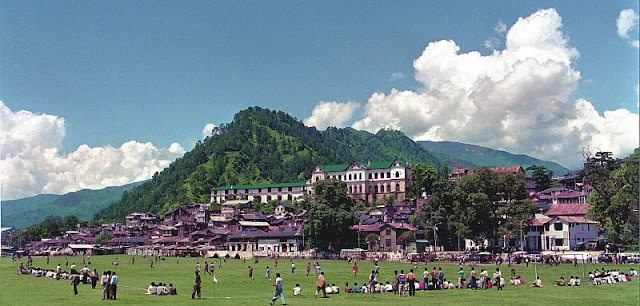
Chamba's annual Suhi Mata Festival, which lasts for four days in early April, commemorates Rani Champavati, the wife of the 10th century Raja Sahil Verma. Only women and children participate in the festival, dancing on the Chowgan before processing with an image of Champavati and banners of the Rajput solar emblem to the Suhi Mata temple. Manjar Fair is a week long festival of singing and dancing at the start of August to celebrate the growth of maize. The Manimahesh Yatra to the sacred tarn of Manimahesh is held immediately after the festival of Janamashtmi. Chrewal, Badronjo or Patroru is a festival of fire and flowers and a time for purification of the fields during the month of August. In same month several places in Chamba celebrates the Gugga fair, which is connected with the worship of 'Gugga', the Nag Devta.